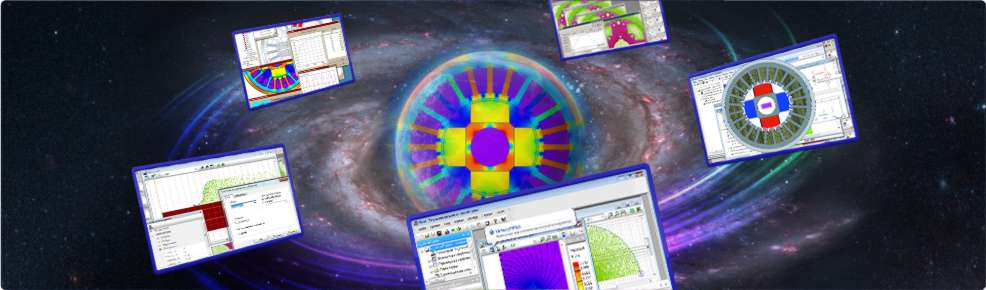
QuickField is a very efficient Finite Element Analysis package for electromagnetic, thermal, and stress design simulation with coupled multi-field analysis. It combines a family of analysis modules using the latest solver technology with a very user-friendly model editor (preprocessor) and a powerful postprocessor.
QuickField requires no training - you may start using it as soon as it is installed on your computer, without knowing the mathematical algorithms used and details of their implementation.
QuickField is a native Windows® application, which was designed for this platform only. It fully utilizes the advantages of a modern operational environment. It is very compact, yet powerful, and can be used for many design applications which require Magnetic , Electric or Thermostructural analysis
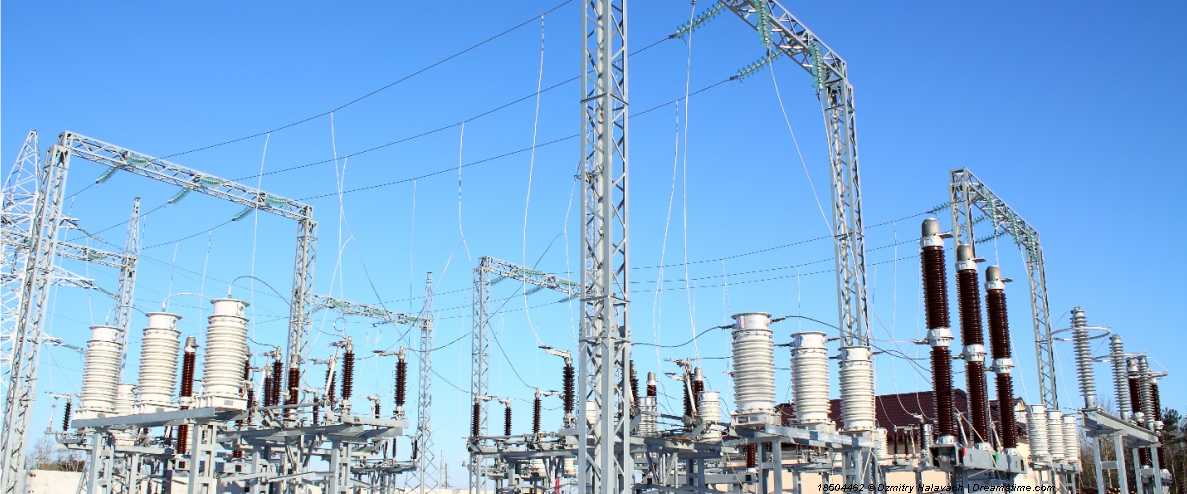
QuickField can be effectively applied to many engineering tasks. Most often, it is used in the design of electric motors, turbine generators, actuators, speakers, transformers, induction heating systems, transmission lines and other complex electrical and electromechanical devices.
The application of QuickField is not restricted to this list. If you are unsure as to how to apply QuickField to your problem - contact us, and we will be glad to help you.
: Finally, he added a new story for the roof plan, adjusting the pivot line offsets of his slanted roof slabs to ensure they tucked perfectly into the structure's spine. By the time Elias reached the
Before ArchiCAD 11, "Teamwork" was functional but clunky. It operated on a "Save & Load" system that felt fragile. With version 11, Graphisoft introduced a more robust reservation system. Multiple architects could work on the same building model simultaneously without fear of corrupting the file. You could reserve elements (walls, slabs, zones) in real-time, and the system would auto-save changes to the server. For medium-sized firms in 2008, this was a game-changer.
While earlier versions had 3D views, ArchiCAD 11 introduced a more intuitive "3D Cutting Plane." You could drag a plane through the model to create an instant perspective section. This was revolutionary for client presentations, allowing architects to "slice" through a building live during a meeting. archicad 11
Several smaller refinements made ArchiCAD 11 easier to use day-to-day. Section and elevation tools were separated in the toolbox, allowing them to have different default settings. Similarly, section and elevation views were now divided in the Navigator, helping with drawing organization on large projects. A new automatic update option could detect the availability of new program and library hotfixes, simplifying maintenance. Pen sets could now be saved with and applied to all project views, giving architects more control over the presentation of drawing information. And ArchiCAD 11 could handle longer file names, making file management more straightforward on modern operating systems.
: Architects could convert any model-generated section or elevation view into an unlinked, purely 2D vector environment. : Finally, he added a new story for
ArchiCAD 11 pioneered early industry standards for cross-discipline collaboration. Through the Industry Foundation Classes (IFC) data exchange format, it allowed seamless interaction with structural and MEP engineers.
Enhanced IFC (Industry Foundation Classes) support allowed Archicad 11 users to collaborate more effectively with structural and MEP (Mechanical, Electrical, Plumbing) engineers using alternative software platforms. Archicad 11 vs. Modern BIM Standards With version 11, Graphisoft introduced a more robust
Archicad 11 vastly improved the flexibility of building geometries. It added support for slanted walls, curved structural profiles, and composite multi-layer slabs. This gave architects the creative license to model complex construction joints accurately, moving beyond standard rectangular structures. Interoperability and the Birth of OPEN BIM
For more insights on how BIM tools have changed from the Archicad 11 era to the present, On Land offers excellent in-depth articles [5].