
Laboratorio de Concretos y Prefabricados CONCRELAB: respaldo técnico para construir con confianza
Concrelab10 febrero 2026
Recent archaeological discoveries have shed new light on the reality behind the Amazon legend. Excavations in the Caucasus region, near the Black Sea, have uncovered evidence of a previously unknown culture of female warriors, who lived around 1000 BCE.
To the ancient Greeks, the very concept of the Amazons represented a complete inversion of their own patriarchal society. Their ascribed homeland was always on the fringes of the known world, a distant place organized in direct opposition to their own. The myths speak of a society of only women, a "man-hating" race where no male was permitted. The warrior women would have children by men of a neighboring tribe, but they would keep only the female children; male offspring were either returned to their fathers, left to die, or, in some of the grimmest accounts, crippled or killed. This horrific custom was the most shocking aspect of their existence to the Greeks, who viewed the disposal of male children as the ultimate unnatural act. The name "Amazon" itself was popularly believed to mean "breastless"—referring to a practice where they would cauterize or remove their right breast to better shoot a bow and throw a javelin, further emphasizing their rejection of traditional femininity.
The myth of the Amazons has fascinated human imagination for millennia. From ancient Greek epics to modern comic books, these fierce warrior women have been depicted as both heroic defenders and ruthless killers. When ancient historians wrote about them, they often used the framing of the "cruel Amazons"—a society of women who rejected traditional gender roles and engaged in brutal warfare.
During the European Age of Exploration, Spanish conquistadors used the term to describe indigenous women who fought fiercely alongside men against European invaders. Francisco de Orellana claimed to have fought fierce female warriors along the Marañón River, leading to the naming of the . Labeling these women as "cruel" and uncivilized served as convenient moral justification for colonial conquest and subjugation. cruel amazons
The story goes that Hippolyta was initially willing to give Hercules the girdle, but her sister, Antiope, suspected a trap and urged the Amazons to attack. The ensuing battle was fierce, with Hercules and his companions fighting against the Amazon warriors. Antiope was killed in the conflict, and Hippolyta was eventually forced to surrender the girdle.
Beyond their structure of society, the Amazons were defined by their role in Greek epic poetry and legends. They were the mythic archenemies of the Greeks, created to be fought, and ultimately defeated, by male heroes in a celebrated narrative known as an Amazonomachy, or "Amazon-battle". Every great hero needed to prove his valor by overcoming a powerful Amazon queen. Heracles’ ninth labor was to steal the golden belt of Queen Hippolyta; the Athenian hero Theseus battled and abducted the Amazon Antiope; and during the Trojan War, the Greek champion Achilles found himself in mortal combat with the Amazon Queen Penthesilea, an engagement from which he was said to have fallen in love with her only as she lay dying.
Provide a list of where these legends appear. Recent archaeological discoveries have shed new light on
In the pantheon of mythological warrior women, the Amazons stand as a paradox. To the modern reader, they are often symbols of female empowerment, strength, and independence—champions of Themyscira led by the compassionate Diana Prince. However, buried beneath this polished, modern veneer lies a darker, more visceral archetype: the .
The Myth and Reality of the Cruel Amazons: History’s Fiercest Female Warriors
The legend of the portrays them as a formidable and ruthless all-female society of warriors who lived on the edge of the known world, famously serving as the mythic archenemies of the ancient Greeks. While often remembered for their bravery, historical and mythological accounts frequently highlight a darker, "cruel" side to their culture and combat. Their ascribed homeland was always on the fringes
The Greek physician Hippocrates and the historian Hellanicus fueled this image by claiming the tribe's very name came from the Greek "a-mazos," meaning "without a breast". This gave rise to one of the most enduring and brutal acts attributed to them: the practice of cauterizing or cutting off a young girl's right breast to allow for better archery and javelin throwing. While modern scholars now believe this to be a mistranslation of a foreign word, the image of Amazons ritually mutilating their own children reinforced their reputation for savage self-mutilation.
The "Cruel Amazon" archetype serves as a complex historical mirror. While often sensationalized in media to highlight the brutality of pre-colonial warfare and the slave trade, these women represent a unique period of female military power. The "cruelty" ascribed to them is often a reflection of the brutal geopolitical realities of 18th-century West Africa, where survival and power were inextricably linked to the capture and sale of human lives.
The Cruel Amazons, a product of ancient mythology and patriarchal imagination, reveal a darker, more complex legacy than initially meets the eye. By examining the historical context, the evolution of the myth, and the controlling gaze of patriarchy, we can gain a deeper understanding of the ways in which societies construct and manipulate narratives about women, power, and violence.
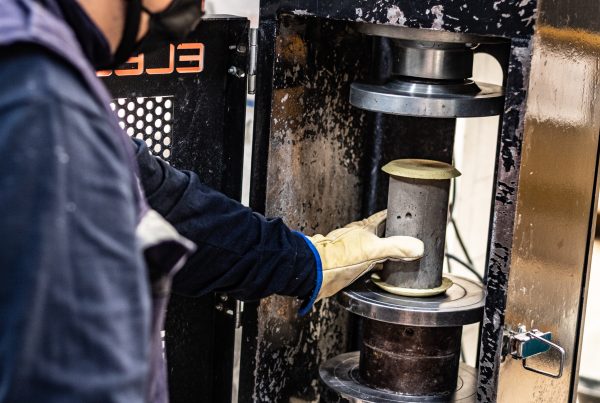 Laboratorio de Concretos y Prefabricados CONCRELAB: respaldo técnico para construir con confianza
 C.I.M.A. – El punto más alto en la calidad de los materiales
 Importancia de la calibración de equipos de temperatura y humedad relativa en la industria y los laboratorios de construcción


